Outdoor heating works best when you choose the heat source for the size and openness of the space, place it where people can feel the heat without creating a fire or trip hazard, and follow the manufacturer’s clearance, fuel, electrical, and ventilation requirements. Portable propane, electric radiant, and permanent gas or electric systems each suit different patios.
TL;DR: Start with the seating area rather than the heater. Decide whether you need portable or fixed heat, confirm outdoor-rated power or fuel access, keep heaters away from combustibles and traffic, and never move an outdoor fuel-burning heater into a garage, tent, enclosed porch, or other enclosed space.
Start by Mapping the Patio You Actually Use
Before shopping, sketch the usable outdoor area. Mark doors, steps, roof overhangs, pergolas, umbrellas, curtains, furniture, grills, planters, walkways, outlets, and any gas connection. The warmest heater is not useful if it blocks circulation or sits too close to something combustible.
Pay particular attention to how enclosed the space is. A fully open patio behaves differently from a screened porch or a roofed area with curtains. Product instructions may limit where a heater can be used, and outdoor fuel-burning appliances should not be treated as safe indoor heaters simply because a door or window is open.
The U.S. Consumer Product Safety Commission warns that outdoor heaters should never be used indoors because carbon monoxide can accumulate rapidly. That safety distinction should guide the project before comfort or aesthetics.
If the patio layout itself is still evolving, position furniture first and heat second. Heating a defined conversation or dining zone is usually more practical than trying to warm every corner of the yard.
Compare the Main Outdoor Heating Options
Portable propane patio heaters
Portable propane models suit open patios where permanent utilities are inconvenient. Their trade-offs are cylinder storage, refilling, wind sensitivity, and stability. Propane Education & Research Council guidance for portable outdoor propane heaters emphasizes outdoor use, keeping units away from traffic and flammables, shutting them off before moving, and storing cylinders outdoors. Follow the individual heater manual for exact clearances and fuel handling.
Electric radiant heaters
Electric radiant heaters can be freestanding or mounted and are useful where suitable outdoor-rated power is available. They avoid fuel cylinders but require correct circuits, weather exposure ratings, mounting, and clearances. For a new circuit or permanent installation, use a licensed electrician where required.
Permanent gas heaters or fire features
Fixed gas radiant heaters and built-in fire features can suit frequently used outdoor rooms, but they involve gas supply, ventilation, shutoff access, permits, and manufacturer requirements. They cost more to relocate if the patio layout later changes.
Wood-burning fire pits and fireplaces
Wood fire adds ambience but also smoke, sparks, fuel storage, and local burn or setback rules. Check local requirements before installation or use, especially under roofs or near structures.
Choose Heat by Seating Pattern
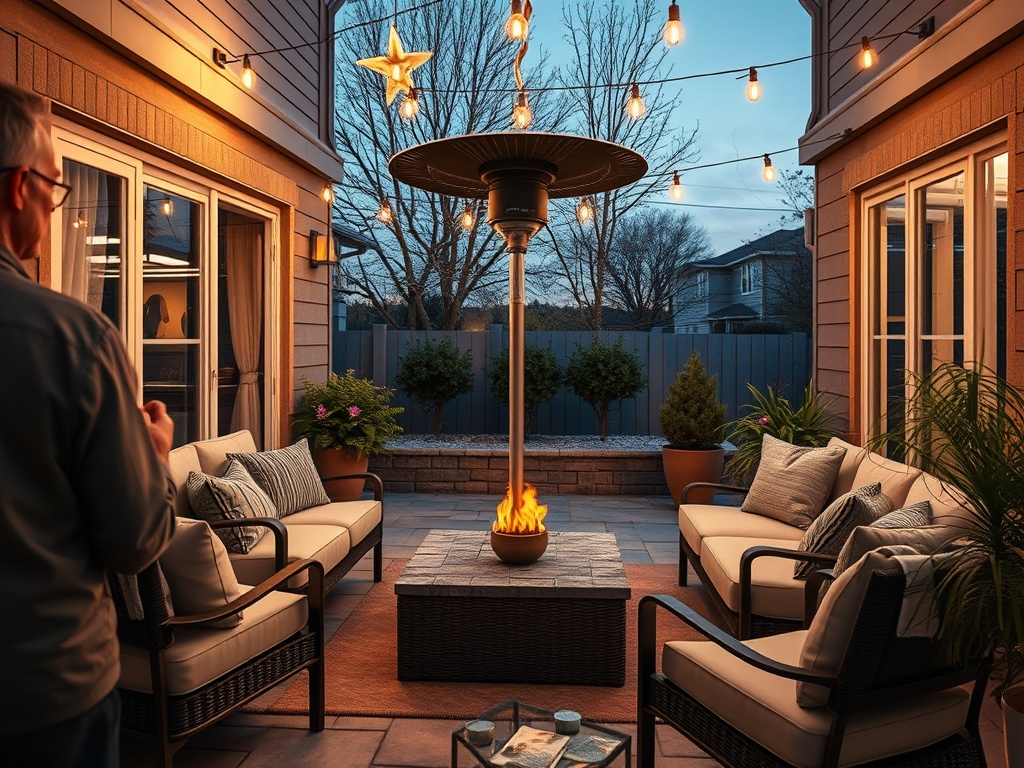
Heat that misses people is wasted. For a dining table, overhead or wall-mounted radiant heat may provide more even comfort than a single tall heater at one end. For a small lounge group, a portable radiant unit near the perimeter may be enough. For a long sofa arrangement, two moderate heat sources can sometimes create better coverage than one high-output unit.
Wind changes everything. Radiant heat is generally more useful outdoors than trying to heat the air itself, but strong wind can still reduce comfort. Wind screens, plantings, or layout changes can help when they are safe and do not violate clearance or ventilation rules.
When adding wind protection, do not create an enclosed pocket around a fuel-burning heater. Comfort features must not interfere with combustion air or trap exhaust.

A Simple Planning Table
| Option | Best for | Installation effort | Main caution |
|---|---|---|---|
| Portable propane | Flexible open-patio seating | Low | Fuel handling, stability, ventilation |
| Portable electric | Small zones near suitable power | Low | Electrical load and weather exposure |
| Mounted electric radiant | Covered or defined seating areas | Moderate | Correct mounting, circuit, clearances |
| Fixed gas radiant | Frequently used outdoor rooms | Higher | Professional gas work and code compliance |
| Fire pit/fireplace | Ambience plus localized heat | Varies | Fire restrictions, smoke, sparks, setbacks |
No option is universally safest or best. The correct choice depends on the specific product rating, site conditions, and local requirements.
Prepare the Area Before Installation
Clear leaves, paper, cushions, covers, and stored materials from the heater zone. Check whether roof overhangs, umbrellas, curtains, shade sails, or décor fall inside manufacturer-required clearances.
Keep freestanding heaters on a firm, level surface and outside main traffic routes. Confirm outdoor-rated power for electric units and correct cylinder connections and storage for propane. New permanent wiring, gas lines, or structural mounting are appropriate jobs for qualified professionals.
Install Portable Heaters Without Creating a Traffic Problem
Arrange furniture first, then position portable heat where it can serve occupied seats without blocking circulation. Do not compensate for poor placement by moving a heater closer to furniture, fabric, or the house than the manufacturer permits.
General CPSC heating safety guidance reinforces stable placement and careful electrical connection, but the heater’s manual remains the source for exact clearances.
Add Permanent Heat With the Patio Structure in Mind
Mounted heaters should serve seating zones rather than empty floor space. Before drilling, identify framing, wiring, plumbing, roof drainage, finish materials, and any opening awnings or curtains.
Verify the permitted mounting angle and clearance to combustibles. If lighting or other outdoor equipment is being added too, plan the electrical layout as one system instead of creating overlapping cords or unsuitable loads.
Make Cooler Nights Comfortable Without Overheating the Space
Heating is only one part of comfort. Wind-protected seating, lap blankets stored indoors, warm task lighting, and a tighter furniture arrangement can reduce the amount of active heat needed.
The grouping principle used in water-saving landscape planning applies here too: compact functional zones are easier to heat, light, supervise, and maintain. Keep fabrics and accessories outside heater clearances and plan protected storage for seasonal equipment.
Troubleshoot Common Patio Heating Problems
If the space still feels cold, check placement and wind before buying a larger heater. A unit may simply be aimed above seated occupants or placed where wind carries heat away.
For ignition, gas odor, breaker trips, hot plugs, or damaged cords, stop using the heater and follow the manufacturer’s safety process or call a qualified professional. Do not bypass safety components or treat repeated electrical trips as a nuisance.
Store heaters away from garden chemicals and application equipment; garden sprayer basics offers a useful reminder to keep outdoor equipment clean and properly stored.
Build a Safer Cooler-Night Setup
Choose portable propane when you need flexibility in an open outdoor area and are prepared to manage cylinders correctly.
Choose electric radiant heat when you have suitable outdoor-rated power and want focused heat with no combustion at the heater.
Choose a permanent gas or electric system when the patio is a long-term outdoor room and professional installation fits the project.
Choose a fire feature when ambience matters and local rules, spacing, smoke, and fuel management make it appropriate.
The best patio heating plan is the one that fits the actual seating zone, respects the product’s installation limits, and remains easy to shut down, inspect, and maintain.
Home and garden information is provided for educational purposes only. Heating equipment, gas work, electrical work, fire features, and structural mounting may be regulated by local codes and manufacturer requirements. Use qualified professionals where required or where the work exceeds your experience.[/