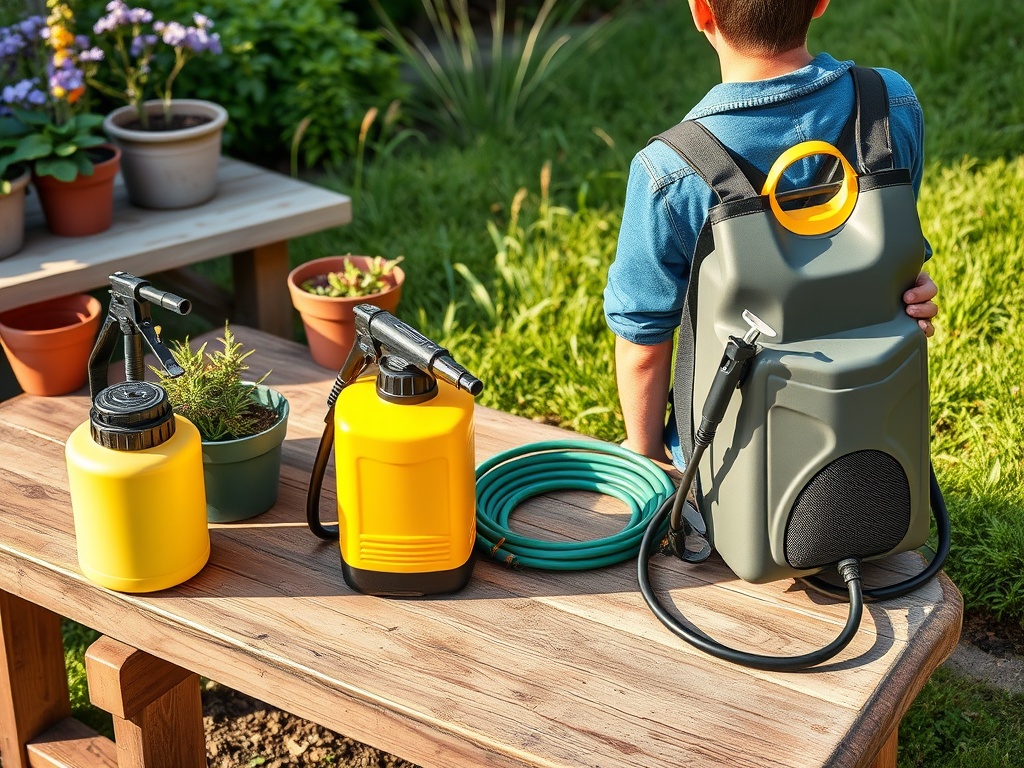
Choose a garden sprayer by the size of the area, the accuracy you need, the product label, and how long you can comfortably carry or pump the equipment. Hand-pump sprayers suit small spot jobs, hose-end models cover larger areas quickly, and backpack sprayers give more control and capacity for repeated or larger applications.
TL;DR: For a few plants or spot treatments, use a small hand-pump sprayer. For broad hose-accessible areas, a hose-end sprayer may be convenient. For larger beds, property edges, or controlled walking applications, a backpack sprayer is usually easier to keep consistent. Always follow the product label and maintain the sprayer carefully.
The Sprayer Is Part of the Application System
A garden sprayer is not just a container with a nozzle. Tank size, pressure, nozzle pattern, hose length, walking speed, and the way a product is mixed all affect coverage. That matters for fertilizers, soaps, horticultural products, herbicides, insecticides, and other liquids.
If the sprayer will be used for a pesticide, the label is the controlling instruction for where and how the product may be applied. EPA's current pesticide label guidance for households and gardens emphasizes reading the label before use because it contains application, protective-equipment, storage, and first-aid directions.
For general watering strategy rather than chemical application, a sprayer may not be the best tool at all. Review water-saving landscape habits when the real goal is irrigation efficiency.
Hand-Pump Sprayers: Best for Small and Precise Jobs
Hand-pump sprayers range from compact handheld bottles to larger pressure tanks with a wand. They suit spot-treated weeds, small beds, or limited groups of plants because the target is easy to see.
Their drawbacks are small capacity and falling pressure as the tank empties. Look for a stable tank, reliable shutoff, pressure relief, and a nozzle pattern that matches the job. A directed spray is often easier to control than a fine mist around desirable plants.
Hose-End Sprayers: Convenient for Broad Coverage
A hose-end sprayer attaches to a garden hose and mixes or draws product according to its design. It can cover lawns or broad beds quickly when the product label specifically permits that application method.
The trade-offs are limited mobility, hose drag, variable water pressure, and less precise placement. Do not assume a sprayer dial overrides the product label; read both sets of instructions.
Backpack Sprayers: Better Capacity and Walking Control
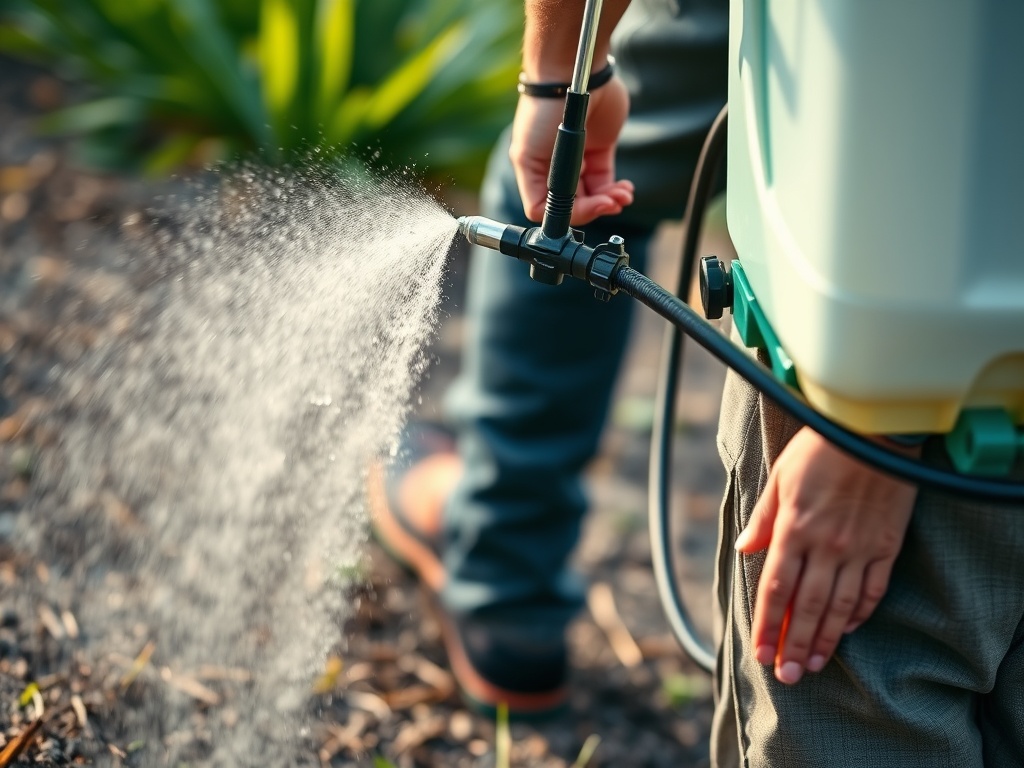
Backpack sprayers carry more liquid and keep the wand in one hand, which can make them useful for larger beds, fence lines, and repeated walking applications.
A full tank can be heavy, and cleaning takes longer. Before using a product, practice with clean water so you understand the nozzle pattern, walking pace, pressure, and shutoff response.
Quick Comparison of the Three Common Sprayer Types
| Sprayer type | Best fit | Main advantage | Main limitation |
|---|---|---|---|
| Hand pump | Small gardens and spot work | Simple and precise | Small capacity and repeated pumping |
| Hose-end | Broad areas near a hose | Fast coverage with little carrying | Less mobility and often less precision |
| Backpack | Larger or repeated walking applications | Capacity and controlled wand use | Heavier and more cleaning |
The “best” model depends on the job. A large tank is not automatically better if the application requires only a small amount of solution.
Match the Nozzle to the Job
The nozzle shapes the spray pattern and droplet size. A fan pattern is often useful for uniform coverage across a strip. A cone can suit some plant applications. A narrow stream can direct liquid toward a specific target but may create uneven coverage if used for a broad area.
Avoid a finer mist simply because it looks thorough. Very small droplets drift more easily. EPA's pesticide safety tips advise against outdoor spraying in windy or rainy conditions and stress keeping pesticides from drifting or running into other areas.
Inspect nozzles for wear, clogging, and uneven patterns. Do not clear a pesticide nozzle by blowing through it with your mouth. Follow the sprayer and product instructions for safe cleaning.
Calibrate Before Accuracy Matters
Calibration checks how much liquid the sprayer actually applies over a known area. It matters whenever a product label gives an application rate by area or uniform coverage is important.
Test with clean water on a measured area using your normal pace and nozzle position. Recheck after changing tips, pressure, or operating technique because output can change.
Avoid Cross-Contamination Between Products
Residue from one product can damage plants during a later application. Herbicide residue is a common concern when the same sprayer is reused for plant-care products.
When practical, dedicate equipment to product categories. Otherwise, follow the label and sprayer manufacturer’s cleaning procedure, including any specified cleaner or rinse steps. Dispose of rinsate according to label and local rules, never into a storm drain or waterway.
Build a Safe Setup Before You Mix Anything
Choose a stable outdoor work area away from children, pets, food, wells, storm drains, and open water. Have the label available. Wear the protective clothing and equipment it requires. Confirm that the tank, hose, wand, seals, and pressure-relief components are intact.
The National Pesticide Information Center's safe-use guidance recommends mixing only what you need, keeping children and pets out of the application area, and taking precautions to reduce drift and exposure. Those are general safety principles; the specific pesticide label can require more protective measures.
If the task is diagnosis rather than application, resist the urge to spray first. Identify the pest or plant problem before choosing a product. For outdoor-equipment storage around a patio, keep sprayers and chemicals away from heat sources; outdoor patio heating options have separate clearance and fuel-safety needs.
Maintenance After Every Use
Do not store a sprayer dirty or pressurized. Release pressure according to the instructions, empty it legally, clean the tank and liquid pathway as required, and let components dry before storage. Inspect O-rings, gaskets, hoses, filters, and nozzles so a small leak is not discovered during the next application.
Store the sprayer where freezing temperatures, direct sun, or accidental damage will not shorten component life. Remove batteries from long-term storage if the manufacturer recommends it, and keep chargers dry.
A well-maintained sprayer is easier to operate consistently and less likely to leak on the operator or onto non-target plants.
Choose by Job Size and Control
Pick a hand-pump sprayer when the task is small, targeted, and easier to manage with a compact tank.
Pick a hose-end sprayer when the label allows it, the area is broad, hose access is easy, and speed matters more than fine control.
Pick a backpack sprayer when you need more capacity, a steady wand position, and mobility across larger beds or property areas.
Whatever the model, equipment choice comes after the product label and the application goal. A sprayer only works well when it delivers the right material to the right place at the right rate.
Home and garden information is provided for educational purposes only. Pesticide application is regulated by product labels and may be subject to state or local requirements. Follow all label directions and seek licensed professional guidance for applications beyond your experience.[/