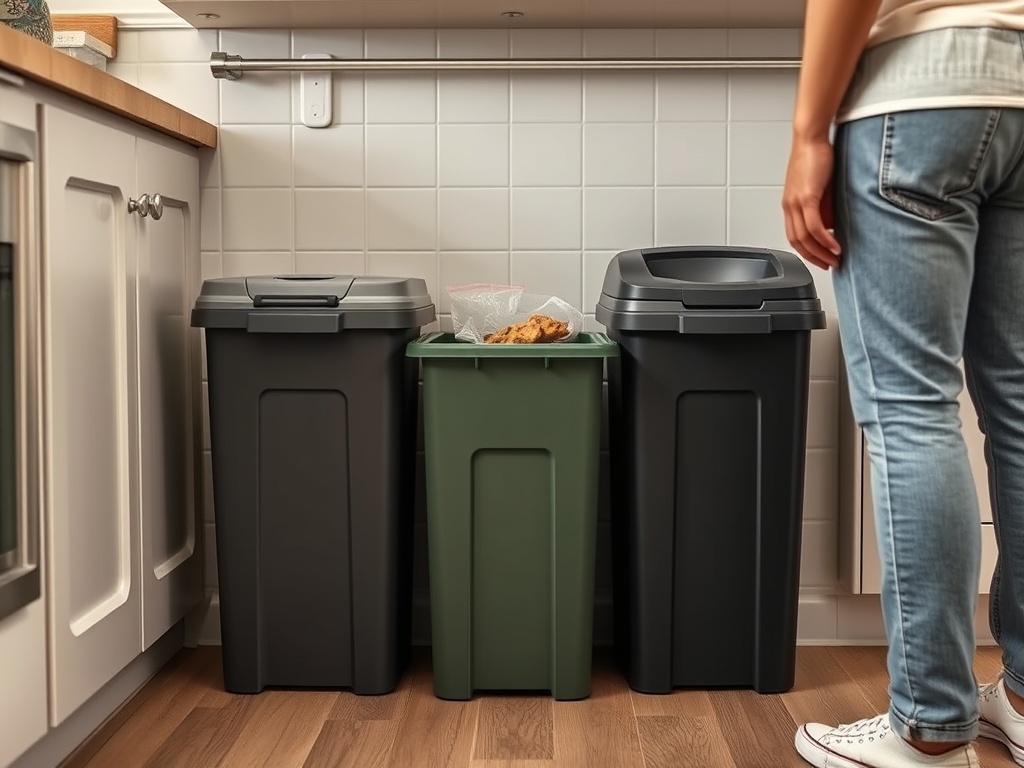
A better household waste station makes the correct action obvious: trash, recycling, compost, and special-disposal items each need a defined container located where the waste is created. Start with local recycling rules, then size and place bins around the household’s actual volume and workflow rather than copying a generic multi-bin setup.
TL;DR: Check local acceptance rules first, separate only the streams your program actually collects, place bins together at decision points, keep recyclables reasonably clean and dry, create a separate safe holding area for batteries or hazardous materials, and make the route to curbside or drop-off easy.
Start With Local Rules Instead of Container Labels
Recycling rules differ by community, processor, building, and collection contract. A package marked “recyclable” is not proof that your local curbside program accepts it.
EPA’s current guide to common recyclables repeatedly advises checking local program requirements because materials such as plastics, foam, bags, food-soiled items, batteries, and electronics are handled differently from place to place.
Before organizing the cabinet, write down the actual streams available to your home. These may include trash, mixed recycling, glass, food scraps, yard waste, deposit containers, batteries, electronics, or household hazardous waste. Do not create a household category if there is no realistic path for emptying it.
Step 1: Measure What You Produce
For several normal days, notice what fills first. A family that cooks often may need more food-scrap capacity. A household receiving many deliveries may need a place to flatten cardboard. A small apartment may generate little trash but struggle with storing recyclables between collection days.
Measure the cabinet, pullout, pantry corner, garage wall, or outdoor enclosure where bins will live. Include door swing, drawer clearance, plumbing, ventilation, and the room needed to remove a full bag.
The best system is not the one with the most compartments. It is the one that fits the waste stream and can be emptied without moving three other bins first.
Step 2: Put Trash and Recycling Side by Side
EPA’s current recycling-right guidance recommends placing trash and recycling bins together. That simple pairing reduces the chance that someone reaches for the nearest container without thinking.
In a kitchen, the pair might sit near the main prep and cleanup area. In a home office, a small paper-recycling basket beside the trash can may be enough. In a garage, larger carts can be positioned near the door from the house so indoor bins are easy to empty.
Use labels that reflect local rules. Pictures can help when guests, children, or multiple household members use the system.
Step 3: Separate Food Waste Only if You Have a Real Destination
If your city collects food scraps or you compost at home, place the food-scrap container where prep waste occurs. A small countertop caddy or under-sink bin is often easier to manage than an oversized container that sits too long.
Choose a container that is easy to wash and that can be emptied without dripping through the house. A fitted lid may help with odor and pests, but ventilation needs depend on the collection method and liner system.
If food waste is not accepted locally and you do not compost, do not create a “compost” bin just because a product is marketed as compostable. EPA notes that compostable plastics are not intended for conventional recycling and can contaminate the recycling stream.

Step 4: Keep Special-Disposal Items Out of Everyday Bins
Batteries, paint, pesticides, solvents, electronics, and other household hazardous materials may require special collection. Do not store these loosely beside food or where children can reach them.
Create a small, clearly defined holding area in a dry location and follow local rules for container condition, terminals, leakage, and transport. The EPA recycling guide notes that household hazardous waste can be dangerous if poured down drains, dumped on the ground, or placed in ordinary trash when special handling is required.
The goal is not to accumulate these items indefinitely. Add local drop-off or event information to a household calendar so the holding area gets emptied.
Step 5: Design the System Around the Trip Out of the House
Indoor bins are only half of the workflow. Think about how material reaches the curb, shared collection room, garage, alley, or vehicle.
If the route includes stairs, narrow halls, or heavy doors, smaller removable bins may be easier than one large container. If cardboard must be flattened, provide a safe place to do it near the exit rather than letting boxes pile up in the kitchen.
For an outdoor enclosure, allow room to open lids fully and roll carts out. Keep the area drained, washable, and accessible without blocking exits or utility equipment.
Step 6: Use Containers That Are Easy to Clean
Waste storage gets dirty. Smooth interior surfaces, removable liners, washable bins, and enough clearance to wipe the floor make maintenance easier.
Avoid decorative containers that trap spills in woven or unfinished materials when they will hold wet waste. If you want a finished look, place durable inner bins inside the decorative surround.
Clean bins before odor becomes the signal. The right cleaning frequency depends on climate, waste type, collection interval, and whether food residue is present.
Step 7: Reduce Re-Sorting by Making Categories Obvious
A system that requires one person to inspect and move everyone else’s waste is too complicated. Use broad categories that match the collection program.
If an item is regularly confusing, add a small example label or household note. Do not cover the bin with a long list that no one reads. For uncertain items, check the local program rather than “wishcycling.”
The same simplicity principle works in other household categories. In organizing kids’ toys without constant re-sorting, broad categories are easier to reset than excessive micro-sorting; household waste systems benefit from the same reduction in decision points.
A Practical Waste-Station Layout
| Zone | Suggested role | Design priority |
|---|---|---|
| Kitchen | Trash, recycling, food scraps if collected | Fast access and easy cleaning |
| Pantry/utility area | Extra bags, liners, returnables | Containment and visibility |
| Garage/entry | Larger collection carts, flattened cardboard | Easy transfer outdoors |
| Secure shelf | Batteries or special-disposal items | Safety and scheduled removal |
| Outdoor enclosure | Municipal carts | Drainage, access, pest control |
Build a Waste Station People Actually Use
Start small. Put trash and accepted recycling together, make both easy to open, and label them clearly. Add food scraps only if you have a collection or composting plan. Give special-disposal items their own safe holding zone.
Then watch the system for a week. If recycling overflows, increase that capacity. If bags snag inside a cabinet, change the bin shape. If cardboard still lands on the floor, add a dedicated flattening or holding spot.
Visual order can come later. If you want the station to blend with the room, use the same measured, function-first approach described in decorating a home on a tight budget rather than buying decorative bins that do not fit the workflow.
A good waste system reduces decisions and unnecessary handling. It should make the locally correct choice the easiest choice.
Home organization and recycling information is provided for educational purposes only. Accepted materials, hazardous-waste rules, composting programs, collection schedules, and building requirements vary by jurisdiction; always check your local solid-waste or recycling authority.[/