Garage door maintenance should focus on safe operation, visible hardware condition, clean tracks, rollers and hinges, weather seals, and regular testing of the opener’s safety features. Homeowners can handle basic inspection and cleaning, but springs, cables, bottom brackets, and major door-balance problems should be left to trained garage-door professionals because stored spring tension can cause serious injury.
TL;DR: Watch and listen to the door, inspect hardware without loosening high-tension parts, keep the photo-eye area clean, test automatic reversal as directed by the opener manual, maintain seals, and call a professional if the door is crooked, unusually heavy, jerky, noisy, or has damaged springs or cables.
Treat the Garage Door as a Moving System
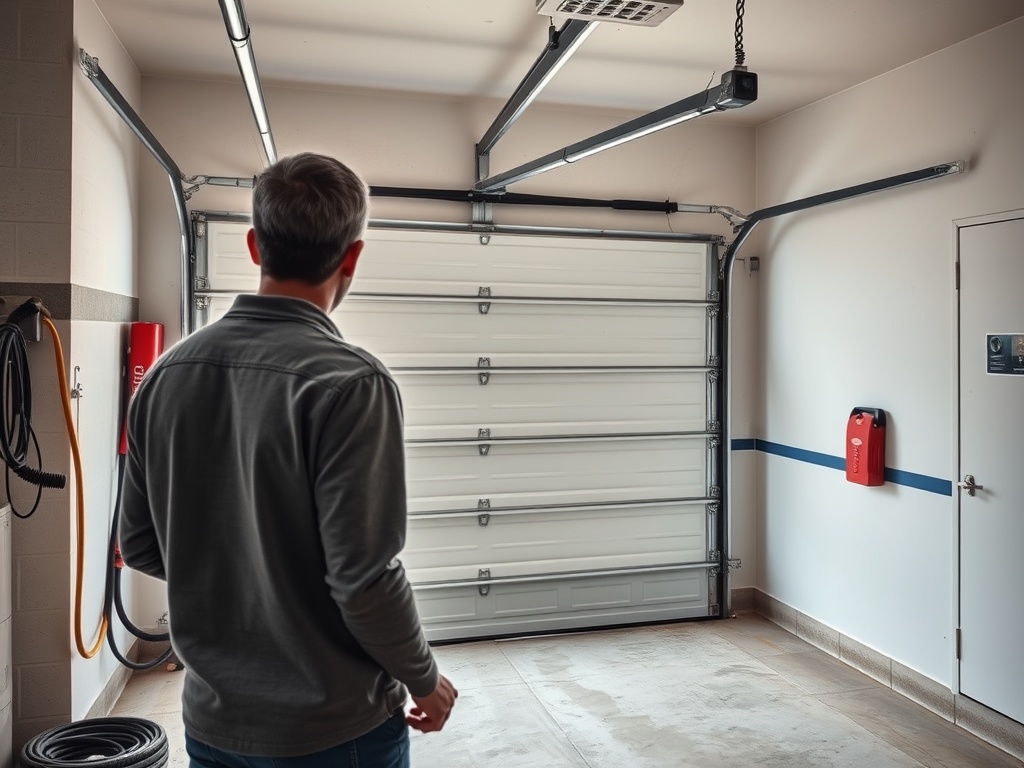
A sectional garage door can be one of the largest moving components in a home. The door panels, tracks, rollers, hinges, springs, cables, brackets, opener, sensors, and controls all have to work together. A problem in one area can increase strain elsewhere.
The U.S. Consumer Product Safety Commission says residential garage door openers should have entrapment protection and advises homeowners to test reversing mechanisms according to the owner’s manual. Its garage-door safety guidance is particularly important for older systems or any opener that does not reverse properly.
Maintenance is not the same as repair. A homeowner can observe, clean, lightly lubricate approved points, and test normal functions. Adjusting torsion springs, extension springs, lift cables, or bottom brackets is a different level of work and can be dangerous.
Begin With a Full Open-and-Close Observation
Stand where you can see the door without standing beneath it and run a complete cycle. Look for uneven movement, shaking, sagging panels, frayed or loose-looking cables, wobbling rollers, and gaps in weather seals.
Listen for new grinding, scraping, popping, or squealing. A change in sound does not identify the cause, but it is a useful clue. If the door is crooked, unstable, or damaged, stop cycling it repeatedly and arrange service.
Inspect the Tracks Without Trying to Realign Them Under Load
Brush or vacuum leaves, dirt, and pebbles from the lower tracks. Wipe residue if needed, but avoid packing tracks with grease that can collect debris.
Look for dents, loose supports, or visible misalignment. Do not casually loosen track brackets to straighten a binding door; track position is part of the loaded system, so significant damage is a professional repair.
Check Rollers, Hinges, and Fasteners
Visually inspect accessible hinges and rollers for cracks, missing fasteners, worn surfaces, bent stems, or wobble. Lubricate only points identified by the manufacturer, since some rollers have sealed bearings.
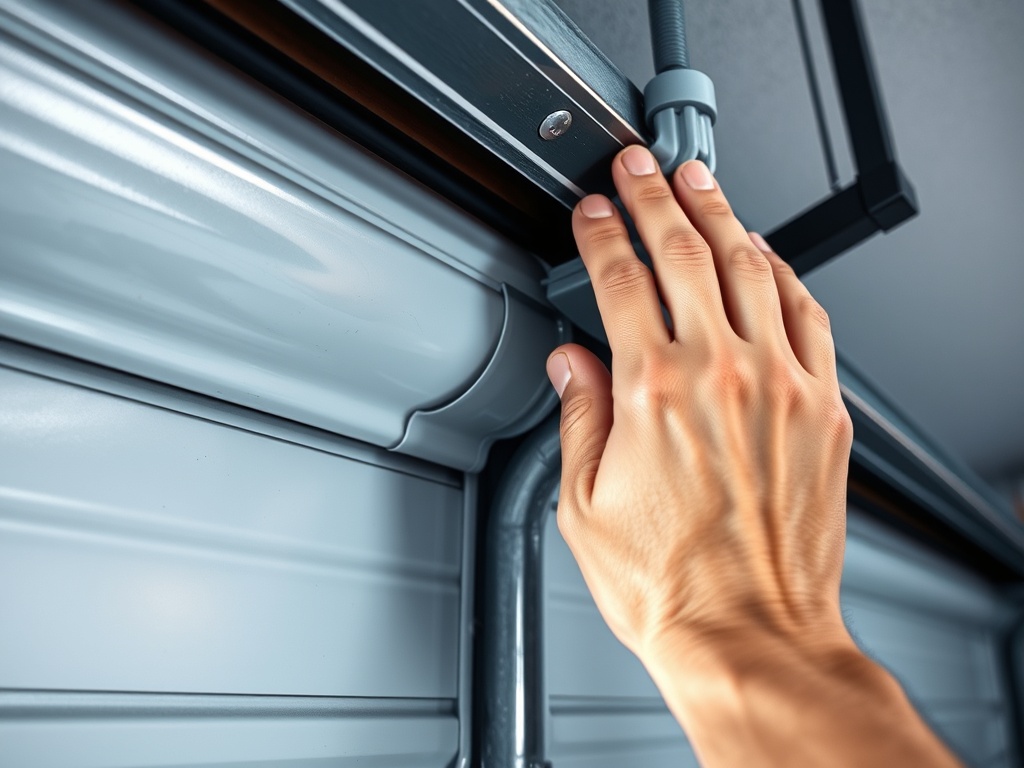
Tighten only ordinary accessible hardware that the manual treats as homeowner-serviceable. Avoid springs, cable drums, bottom brackets, and other high-tension components. This inspection pairs well with other seasonal tasks such as removing and replacing old caulk.
Test the Photo-Eye System
Most modern automatic openers use photoelectric sensors near the bottom of the opening. These sensors must face each other and have a clear line of sight.
Wipe dust or spider webs from the sensor lenses with a soft dry cloth. Check that the brackets are secure and that stored items, trash cans, or garden tools do not block the beam.
Then test the system exactly as the opener manufacturer instructs. A closing door should respond appropriately when the sensor beam is interrupted. If sensors are misaligned, damaged, or intermittent, repair the issue before relying on automatic operation.
CPSC notes that external entrapment protection such as an “electric eye” became part of federal safety requirements for residential openers manufactured in the modern standards era. If an older opener lacks these protections, replacement rather than improvised modification may be appropriate.
Test Automatic Reversal as the Manual Directs
Photo eyes are only one safety layer. The opener’s contact-reversal system should also be tested at the interval and by the method specified in its manual.
CPSC historically recommends a simple obstruction test for compliant openers and has long emphasized regular reversal testing. Because opener designs and current manuals differ, follow your specific manufacturer’s procedure and test object dimensions rather than relying on memory.
If the door fails a safety test, stop using automatic closing until the system is corrected. Do not increase closing force to make a struggling door “push through” a mechanical problem.
A door that requires excessive opener force may have balance, spring, track, or hardware issues that should be diagnosed first.
Check Door Balance Carefully
A balanced door should not feel extremely heavy or race up or down when manually operated. Only perform a balance check if the manufacturer provides a homeowner procedure and you can safely disconnect and reconnect the opener.
If the door drops, rises sharply, feels unusually heavy, or will not stay where expected, stop and call a qualified technician rather than adjusting springs.
Inspect Springs and Cables Visually Only
From a safe position, look for a broken-spring gap, frayed cables, a cable off its drum, rusted or distorted components, or one side of the door hanging lower than the other.
Do not touch, loosen, clamp, or remove these parts. Springs and lift cables can release stored energy suddenly.
Maintain Weather Seals and the Bottom Edge
Inspect the bottom seal and perimeter weatherstripping for brittleness, tears, compression, or gaps. Light showing under one side can indicate a worn seal, uneven slab, or alignment issue.
Simple perimeter seals may be homeowner-serviceable when the mounting system is straightforward. If the bottom retainer is damaged or near high-tension brackets, use professional service. Fixed trim gaps are a different repair; use an appropriate sealant rather than treating garage-door weatherstripping as a caulk joint. If sprinklers repeatedly wet the door or frame, water-saving landscape habits can help correct overspray at the source.
Keep the Opener and Controls Safe
Keep remotes away from young children and never treat the closing door as a game. Make sure adults know how the emergency release works before a power outage.
For battery backup or smart connectivity, follow the opener manufacturer’s maintenance instructions. Convenience features do not replace mechanical safety checks.
Build a Simple Maintenance Rhythm
A practical schedule can be tied to seasonal changes rather than a complicated calendar. Every few months, operate the door while watching and listening. Keep tracks and sensor areas clean. Inspect seals when weather changes. Test safety reversal at the interval required by the opener manual.
At least once a year, consider a professional inspection if the system is older, heavily used, noisy, or showing wear. A technician can evaluate spring balance, cable condition, drums, bearings, track alignment, and opener settings that are not appropriate for casual adjustment.
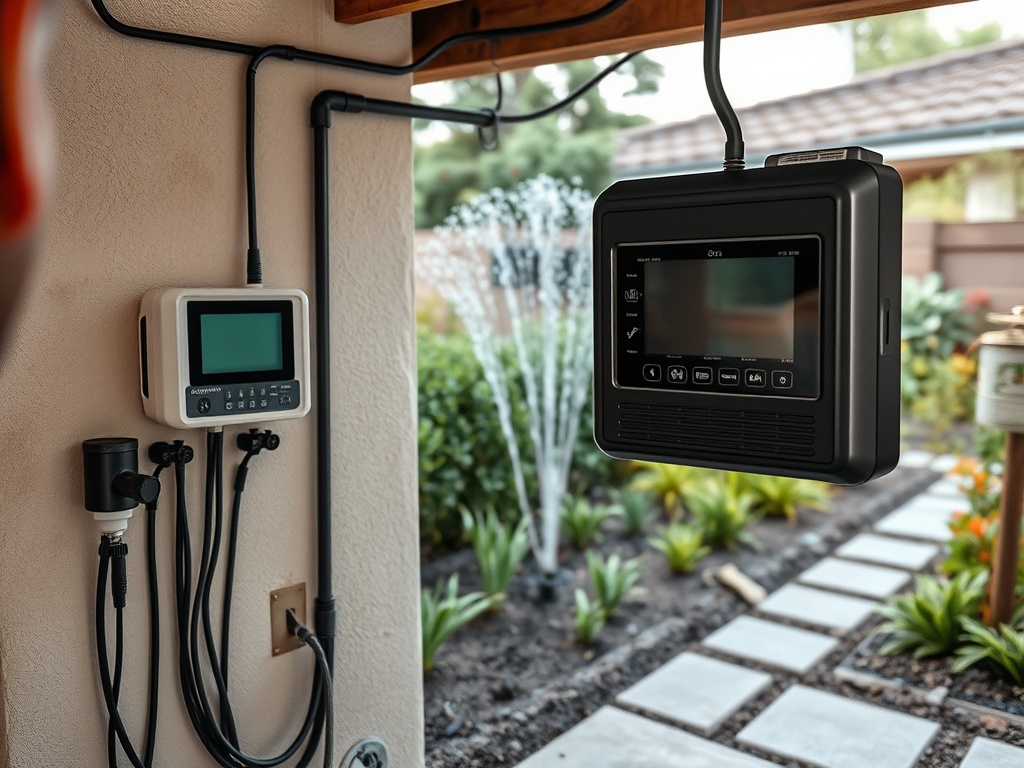
If your home uses outdoor irrigation near the garage, avoid spraying the door, opener wiring, or stored materials unnecessarily. The water-management approach in smart irrigation systems and water savings can help keep irrigation aimed at the landscape instead of the building.
Keep the Door Moving Safely
Do the simple things consistently: observe the door, clean debris, inspect accessible hardware, maintain seals, and test required safety features. Those habits make changes easier to notice.
Call a professional when the issue involves springs, cables, bottom brackets, major alignment, a door that feels dangerously heavy, failed entrapment protection, structural damage, or electrical problems beyond routine sensor cleaning.
A quiet, smooth door is useful, but safety is the real maintenance goal. The opener should never be used to compensate for a mechanical door that is difficult to move.
Home maintenance information is provided for educational purposes only and is not a substitute for professional garage-door, structural, or electrical advice. Follow the door and opener manufacturer’s instructions, and do not service high-tension spring or cable components unless properly trained.[/