Weather-resistant fasteners and anchors are selected by matching material, coating, exposure, connected materials, and load requirements to the exterior environment. The right choice reduces corrosion risk, but it must still be verified against project specifications, manufacturer data, and applicable code requirements.
Key Takeaways:
- Exterior fastening is a system decision, not a hardware-bin decision.
- Moisture, salt, chemicals, treated lumber, dissimilar metals, and maintenance access all affect selection.
- No coating or alloy is universal, so the safest approach is to document exposure and confirm compatibility before installation.
The decision behind exterior fastening
The main decision is how the fastener or anchor will perform after seasons of moisture, temperature change, UV exposure, washing, pollutants, or coastal air. Strength matters, but corrosion resistance, coating compatibility, and inspection access are just as important for exterior work.
A fastener may be strong enough on day one and still be a poor choice if it reacts with adjacent metal, degrades in treated lumber, or loses coating during installation. Exterior selection should begin with the exposure category and the connected materials, then move to structural demand and manufacturer approval.
Risk planning should also connect back to Emergency maintenance response planning for floods, leaks, and outages so maintenance teams are not treating system upgrades and emergency response as separate conversations.
Common material and coating options
Stainless steel is often used where corrosion resistance is a priority, though grade selection matters. Hot-dip galvanized steel is common for many exterior connections, but coating thickness, damage during installation, and contact with other metals should be reviewed. Zinc-plated hardware is usually less suitable for sustained exterior exposure unless the product data clearly supports the application.
Manufacturer guidance can help compare coating families, but the project team should avoid treating brand claims as design proof. For exterior anchoring into masonry or concrete, the base material condition, embedment, edge distance, moisture exposure, and inspection method also matter.
Dissimilar metals and hidden corrosion paths
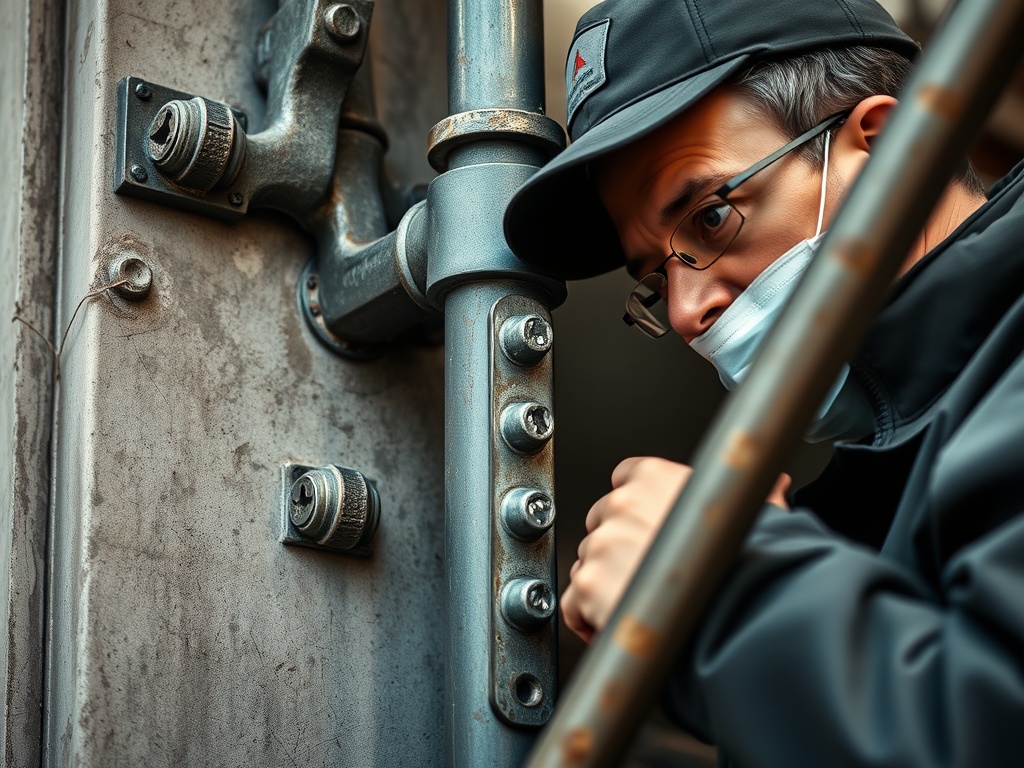
Galvanic corrosion can occur when dissimilar metals are in electrical contact in the presence of an electrolyte such as water. Risk depends on the metal pairing, surface area relationship, and environment. This is why washers, brackets, flashing, cladding, and fasteners should be reviewed together rather than separately.
For compatibility checks, corrosion information from Simpson Strong-Tie can help teams avoid treating all exterior hardware coatings as interchangeable.
Hidden corrosion is especially troublesome on railings, exterior stairs, rooftop equipment supports, facade attachments, decks, and site structures. Once rust staining or movement appears, the repair may require opening finishes or replacing adjacent materials, not just swapping a few screws.
Installation practices that protect the selection
Even well-selected fasteners can fail early if installed incorrectly. Overdriving can damage coatings, wrong bits can strip heads, and poor hole cleaning can reduce anchor performance. Sealant should not be used to hide a weak fastening plan. It can help manage water, but it cannot replace mechanical suitability.
A strong submittal should identify product type, coating or alloy, compatible connected materials, exposure assumptions, installation method, inspection needs, and replacement considerations. That level of documentation is often more valuable than a generic note saying exterior-grade hardware.
For exterior asset planning, The basics of roadway resurfacing and pavement maintenance planning gives a related view of how inspection findings can be turned into scheduled maintenance decisions.
Submittal details that prevent exterior failures
Exterior fastening decisions should be traceable. The submittal should show the exact product, material, coating, approved base material, installation method, and environmental assumptions. A vague description such as corrosion resistant is not enough for exposed work where replacement may be difficult.
Installers should know whether drilling, cutting, or driving can damage protective coatings. If field cutting is unavoidable, the repair method should be approved before work begins. Small installation habits can decide whether a fastener performs as intended or begins to corrode early.
Compatibility review should include adjacent flashing, brackets, washers, treated wood, sealants, and concrete or masonry conditions. A connection can look simple on a drawing but behave differently when moisture is trapped between layers or when dissimilar metals remain wet for long periods.
Inspection planning is also part of selection. If a fastener will be buried behind cladding, under decking, or inside a rooftop curb, the team may need a more conservative material choice than it would use for a visible, replaceable connection.
For compatibility checks, galvanic compatibility guidance can help teams avoid treating all exterior hardware coatings as interchangeable.
The safest exterior assemblies come from matching the product to the environment, following the manufacturer instructions, and documenting the basis for the choice so maintenance teams understand what was installed.
Choosing weather-resistant fasteners and anchors for exterior work decision matrix
| Selection factor | Question to ask | Why it affects durability |
|---|---|---|
| Exposure | Will it face rain, salt, chemicals, washdown, or trapped moisture? | Different environments accelerate corrosion differently |
| Material contact | What metals or treated materials touch the fastener? | Compatibility affects galvanic corrosion risk |
| Installation | Will coating be damaged by drilling, driving, or tightening? | Field damage can reduce protection |
| Inspection access | Can the connection be checked later? | Hidden fasteners need more conservative choices |
Fastener selection QA review
A final hardware review should compare the product schedule against the actual locations where fasteners will be installed. Exterior walls, roof edges, shaded areas, coastal exposures, washdown areas, and chemically treated materials may all need different choices.
The review should also confirm that substitutions are not made casually in the field. A similar-looking anchor, screw, or washer may have a different coating, grade, approval, or compatibility limit.
When in doubt, the team should ask for written confirmation from the designer, manufacturer, or qualified professional before installation continues.
For projects considering different delivery approaches, Modular structural systems: where they make sense offers a related look at where repeatable systems may or may not fit.
Exterior fastening documentation follow-through
The completed work should leave behind a usable record of installed fastener types, locations, and any approved substitutions. Maintenance teams need that information when corrosion, movement, staining, or future attachments are evaluated.
For high-exposure areas, inspection frequency should be discussed before closeout. A fastener that is appropriate for the environment may still need periodic review when the assembly is difficult to replace or supports public access. The same record should note cleaning routines, sealant interfaces, and nearby materials that could affect corrosion over time.
Exterior fastening review list
- Identify the actual exposure, including cleaning chemicals and salt.
- Check fastener, anchor, washer, bracket, and base material compatibility.
- Use manufacturer data for the exact product, not a similar product family.
- Avoid mixing metals without reviewing galvanic conditions.
- Document torque, hole cleaning, embedment, and inspection expectations.
Professional-use note for weather resistant fasteners exterior
This construction and maintenance content is for informational and educational purposes only. It does not constitute professional engineering, legal, code-compliance, safety, insurance, or project management advice. Requirements vary by jurisdiction, site conditions, contract terms, and authority having jurisdiction, so qualified professionals should review project-specific decisions.
Exterior hardware field takeaway
Weather resistance comes from fit, compatibility, installation, and maintenance access. Treat every exterior fastener as part of an exposed assembly, then confirm the choice with project-specific professional review.