Roadway resurfacing is the planned renewal of a pavement surface before deterioration reaches the base or subgrade. Good maintenance planning separates roads that need preservation from roads that need deeper repair, reconstruction, or drainage correction.
Key Takeaways:
- Resurfacing works best when the pavement structure is still sound enough to support a new wearing surface.
- Inspection should look beyond surface cracks and include drainage, ride quality, utility cuts, patch history, and traffic demands.
- A maintenance plan should rank segments by condition, risk, timing, and available funding rather than treating every rough road the same way.
When exterior assemblies are part of the scope, Choosing weather-resistant fasteners and anchors for exterior work is a useful companion topic for matching materials to exposure conditions.
What resurfacing does and does not fix
Resurfacing usually means adding a new surface layer or treatment after preparing the existing pavement. It can improve ride quality, restore skid resistance, seal minor surface defects, and extend service life when used at the right time. It is not a cure for failed base material, persistent drainage problems, severe rutting, or structural distress that reflects deeper movement.
For beginners, the easiest distinction is this: resurfacing improves a road that is aging but still fundamentally serviceable. Reconstruction rebuilds a road that has lost structural capacity. Between those points are repair options such as patching, milling, crack sealing, localized base repair, and drainage work.
What inspectors look for before planning work
A pavement walk-through or condition survey should document cracking, potholes, rutting, settlement, edge failure, water ponding, utility trench settlement, and patch frequency. Photos are useful, but location-based notes are better because they help planners compare segments and revisit problem areas after storms or freeze-thaw cycles.
Traffic matters as much as pavement appearance. Bus routes, loading areas, industrial access roads, and intersections may experience different stress than low-volume streets. Maintenance planners should also review upcoming utility work so a newly resurfaced road is not immediately cut open for underground service repairs.
For pavement planning context, FHWA pavement preservation guidance provides a useful reference before converting field observations into maintenance priorities.
Treatment selection in plain English
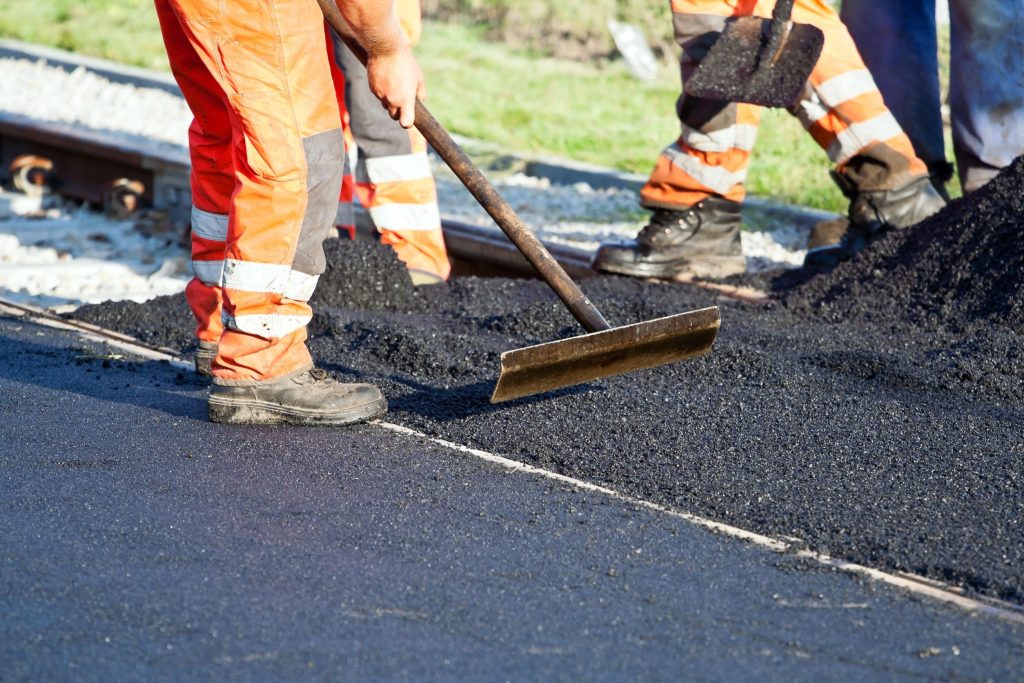
Common treatments range from crack sealing and surface treatments to mill-and-overlay work. The right choice depends on current condition, climate, traffic, drainage, budget, and agency standards. The Federal Highway Administration describes pavement preservation as planned work used to keep good roads in good condition, which is a helpful way to think about timing rather than waiting for failure.
When a roadway needs curb, inlet, sidewalk, or utility coordination, resurfacing becomes more than a paving task. It becomes a scheduling exercise. The team has to consider access, detours, resident notifications, emergency routes, material availability, and weather windows.
Planning errors that shorten pavement life
The most common planning error is choosing the treatment that fits the current budget instead of the pavement problem. A thin overlay on a drainage failure may look good briefly, then crack or settle again. Another mistake is resurfacing over poorly compacted utility patches without correction. Surface renewal is only as reliable as the layer supporting it.
This topic also connects with How electrical load studies inform renovations and equipment upgrades where the same planning logic applies to another part of construction and maintenance work.
A practical plan should also identify maintenance triggers. For example, a road with early cracking may be scheduled for crack sealing now and resurfacing later, while a road with widespread base failure may move directly into engineering review. This prevents crews from spending preservation money where rehabilitation is needed.
Field records that improve pavement planning
Roadway planning becomes more defensible when condition notes are consistent from one segment to the next. A simple rating method, location photos, drainage notes, patch history, and traffic observations can help owners explain why one street is resurfaced while another is monitored or repaired differently.
Maintenance teams should record where water stands after rain, where snowplows or sweepers catch defects, and where utility trench patches settle. These details are easy to miss during a dry-weather inspection, yet they often explain why the same distress returns after every repair.
For pavement planning context, asphalt repair and resurfacing preparation manual provides a useful reference before converting field observations into maintenance priorities.
Coordination records also matter. If a water main, gas line, fiber route, or stormwater improvement is scheduled nearby, resurfacing may need to wait or include protective sequencing. The plan should prevent the frustrating cycle of paving a road and then cutting into it soon after.
For public-facing work, planners should document access needs for residents, deliveries, emergency services, transit, and waste collection. These items may not change the pavement treatment, but they strongly affect public disruption and field scheduling.
A useful maintenance file allows future teams to compare what was planned, what was built, and how the pavement behaved after seasonal exposure. That feedback makes the next resurfacing cycle smarter.
The basics of roadway resurfacing and pavement maintenance planning decision matrix
| Road condition | Likely planning response | Why it matters |
|---|---|---|
| Minor surface cracking | Crack sealing or surface treatment | Keeps water out before larger distress forms |
| Widespread roughness with sound base | Mill and overlay may be considered | Improves ride while preserving existing structure |
| Potholes and repeated patch failures | Investigate base and drainage | Surface work alone may not hold |
| Utility cuts or settlement | Coordinate repairs before paving | Avoids cutting into fresh pavement |
Roadway resurfacing QA review
A resurfacing plan should also identify what will not be fixed by the selected treatment. If drainage, base failure, or utility settlement remains unresolved, the report should explain the risk clearly so decision-makers do not mistake a smoother surface for a complete repair.
Interior comfort decisions can also tie into Acoustical treatments that improve comfort in open interiors when the project affects occupant experience after construction is complete.
Photos, maps, and condition notes should be stored with the maintenance plan. Those records help future teams understand why the selected treatment was chosen and when another review should happen.
Roadway documentation follow-through
The plan should state when the roadway segment should be reviewed again. That follow-up date helps owners avoid waiting until the next visible failure before making maintenance decisions.
Roadway maintenance planning notes
- Map defects by location, not just by general description.
- Check drainage and utility work before selecting a resurfacing method.
- Prioritize high-risk routes and areas with accelerating deterioration.
- Match treatment type to pavement condition rather than budget alone.
- Keep records so future maintenance decisions are easier to justify.
Professional-use note for roadway resurfacing basics
This construction and maintenance content is for informational and educational purposes only. It does not constitute professional engineering, legal, code-compliance, safety, insurance, or project management advice. Requirements vary by jurisdiction, site conditions, contract terms, and authority having jurisdiction, so qualified professionals should review project-specific decisions.
Pavement planning takeaway
A basic resurfacing plan should help decision-makers act before minor pavement distress turns into expensive structural repair. Start with condition, drainage, timing, and coordination, then choose the treatment that fits the road rather than the other way around.