
In 2026, museums and galleries are treating digital interactives, AR labels, and multisensory exhibitions less as novelty add-ons and more as interpretation infrastructure. The strongest projects will improve access, context, and visitor choice without letting technology overpower the object or story.
TL;DR: Durable change is happening around layered interpretation, accessibility, multilingual support, data-informed design, and hybrid experiences. The hype is in technology for its own sake, especially when it distracts from collections, staff capacity, or visitor needs.
Trend 1: Labels Become Layered, Not Longer
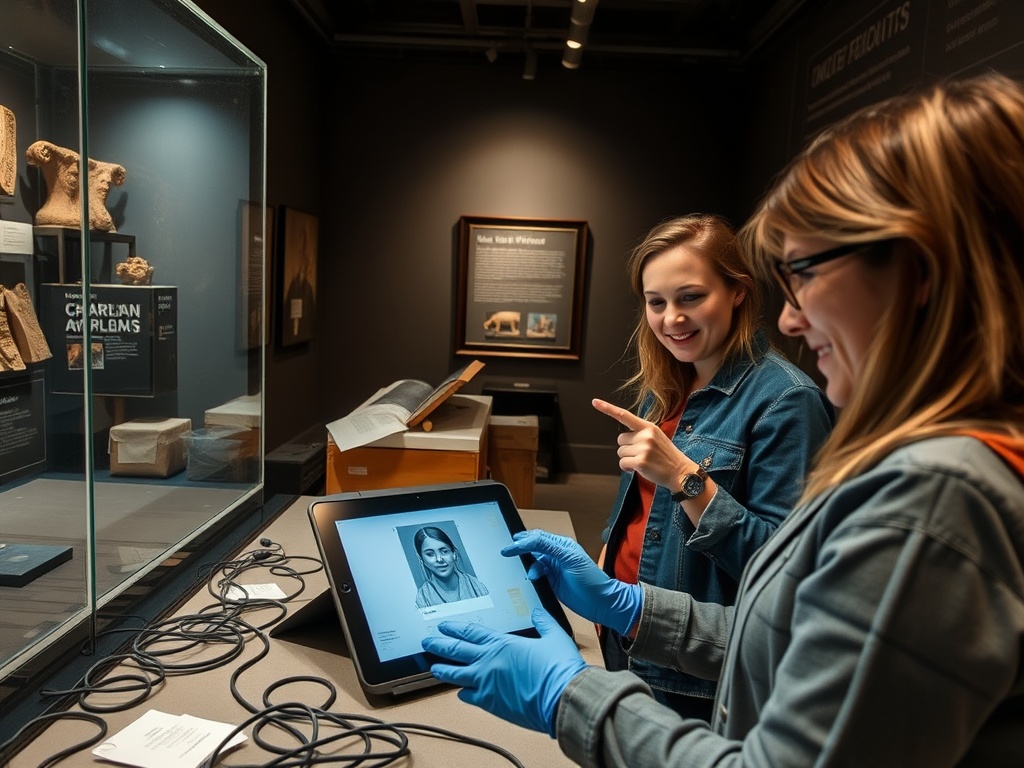
Traditional wall labels have limited space. Digital labels can offer layers: short summary, deeper context, audio, conservation notes, artist interviews, provenance, language options, and accessibility features. The shift is not “more text everywhere.” It is giving visitors the level of detail they want without crowding the gallery.
The Association of Art Museum Interpretation has described digital labels as a bridge between curatorial design intentions and deeper visitor options in its article on digital interactive labels. That framing matters. The label should serve interpretation, not compete with the artwork.
Trend 2: AR Works Best When It Solves a Specific Problem
Augmented reality can reconstruct missing context, show an object’s original setting, reveal hidden layers, compare restoration states, or guide visitors through a complex space. It works poorly when it simply adds floating spectacle. In 2026, better institutions will ask, “What can visitors understand through AR that they cannot understand as clearly through text, audio, or display design?”
Durable uses include architectural overlays, archaeological reconstruction, process visualization, and accessibility support. Hype uses include gimmicky animations that slow traffic, require awkward downloads, or age badly.
Trend 3: Multisensory Does Not Mean Overstimulating
Multisensory exhibitions can include sound, scent, touch, temperature, vibration, lighting, spatial design, and guided movement. The strongest examples are intentional and optional. They help visitors understand material, place, memory, or process. The weakest examples overwhelm audiences or treat sensory design as social-media bait.
Accessibility is central. Some visitors need quiet routes, captioning, tactile models, audio description, seating, low-sensory hours, or clear content warnings. Multisensory design should expand access, not create a single intense path.
[Image Placeholder 1: museum interactive label testing]
Trend 4: Digital Vulnerability Becomes a Board-Level Concern
Museums now manage ticketing systems, digital collections, donor databases, apps, interactives, online stores, and visitor analytics. That makes cybersecurity and vendor governance part of cultural work. The American Alliance of Museums’ Center for the Future of Museums highlighted digital vulnerabilities as one of the areas in TrendsWatch 2025, and that concern carries into 2026 as digital layers multiply.
Visitors may enjoy seamless interactives, but institutions must ask where data goes, how long it is kept, who maintains the platform, and what happens if a vendor disappears. A broken digital layer can become an accessibility failure, not merely an inconvenience.
Trend 5: Data Informs Flow, but Staff Still Interpret
Digital interactives can show which labels visitors open, where they pause, what languages they select, and which paths cause congestion. That data can help improve layout and programming. It cannot replace educators, guards, curators, conservators, or community advisors.
| Technology | Durable Value | Hype Risk |
|---|---|---|
| Digital labels | Layered access and multilingual support | Walls full of QR codes with little payoff |
| AR overlays | Context that is hard to show physically | Novelty animations that distract |
| Sensory design | Memory, access, and material understanding | Overstimulation and Instagram staging |
| Visitor analytics | Better flow and programming decisions | Privacy concerns or shallow metrics |
| Hybrid content | Pre-visit and post-visit learning | Treating online views as equal to engagement |
The comparison to festival technology is useful. Cultural institutions and live events both use digital systems to manage flow, payment, access, and interpretation. The article on cashless festivals and crowd-flow technology shows how operational tech can shape the audience experience behind the scenes.
Who Feels the Shift First
Large institutions with capital budgets, digital teams, and visitor research programs will move first. Touring exhibitions and blockbuster shows will also adopt layered interactives because they need repeatable systems across venues. Smaller museums may adopt lighter tools: mobile-friendly labels, audio clips, low-cost tactile additions, or simple digital maps.
Artists and curators will need clearer conversations about what digital interpretation adds. Educators will need to plan for different attention styles. Front-of-house teams will need training because visitors ask them when interactives fail.
What Buyers and Leaders Should Ask
Before buying a platform, ask who maintains content, how accessibility is tested, whether the system works without perfect Wi-Fi, how visitor data is handled, and whether the institution can export content later. Ask what happens when labels need updating after scholarship changes. Ask how the tool serves visitors who do not want to use a phone in the gallery.
For exhibitions involving translation, comics, or visual storytelling, the relationship between words and layout is especially important. The guide to lettering, translation, and localization offers a useful cross-disciplinary lesson: reading experience is designed, not accidental.
What to Ignore in 2026
Another 2026 shift is procurement maturity. Museum teams are becoming more comfortable asking vendors for accessibility documentation, content export options, maintenance terms, privacy language, and realistic staffing assumptions. That may sound less exciting than a new headset, but it is what keeps an exhibition usable after opening week. Good digital interpretation has a life cycle, not just a launch moment. Smaller institutions can use the same mindset by piloting one gallery, measuring visitor questions, and expanding only after staff know how updates will be handled. Visitor support scripts should be written before launch, so a guard, educator, or volunteer can explain the tool without hunting for the digital team.
Ignore demos that cannot explain learning goals. Ignore vendors that treat accessibility as a later feature. Ignore projects that require visitors to surrender unnecessary personal data. Ignore claims that AR automatically attracts younger audiences. Young visitors, like all visitors, can tell when technology has no purpose.
Practical Museum-Tech Outlook
The winning 2026 approach will be calm, layered, and visitor-centered. Use digital tools where they deepen interpretation, improve access, or reduce friction. Keep the object, story, artist, community, and visitor at the center. Technology should make the exhibition easier to enter, not harder to understand.