TL;DR For women new to resistance training, the most useful exercises are stable, teachable movements that cover the major patterns: squat, hinge, push, pull, single-leg work, carrying, and trunk control. “Best” means you can perform the movement safely, progress it gradually, and recover well enough to repeat it.
Women do not need a separate set of basic strength-training principles. Exercise selection should reflect goals, experience, mobility, equipment, previous injuries, and individual preferences. The U.S. Office on Women's Health recommends muscle-strengthening activity for women at least two days each week, alongside aerobic activity, but the exact exercises can vary widely.
A beginner program should therefore prioritize movement quality and progression rather than novelty. Machines, dumbbells, barbells, resistance bands, and bodyweight exercises can all work. The tool matters less than whether the exercise provides an appropriate challenge through a comfortable range of motion.
Choose Movements That Cover the Whole Body
A simple strength routine can be built from movement categories instead of a long list of body parts. This makes the program easier to remember and reduces the chance of filling the week with multiple similar exercises while missing a basic pattern.
| Movement pattern | Beginner-friendly options | What it develops |
|---|---|---|
| Squat | Sit-to-stand, goblet squat, leg press | Legs and hip strength through knee-dominant movement |
| Hinge | Dumbbell Romanian deadlift, cable pull-through | Hip and posterior-chain strength |
| Horizontal push | Incline push-up, machine chest press, dumbbell press | Chest, shoulders, and triceps |
| Horizontal or vertical pull | Cable row, supported dumbbell row, lat pulldown | Back and arm pulling strength |
| Single-leg | Step-up, supported split squat | Leg strength, control, and side-to-side capacity |
| Carry | Farmer carry or suitcase carry | Grip, trunk control, and whole-body coordination |
| Trunk stability | Dead bug, plank variation, Pallof press | Bracing and force transfer |
These are examples, not mandatory exercises. If a movement causes pain, feels unstable, or cannot be adjusted comfortably, choose another option or seek qualified instruction.
The Squat Pattern: Start Where Control Is Easy
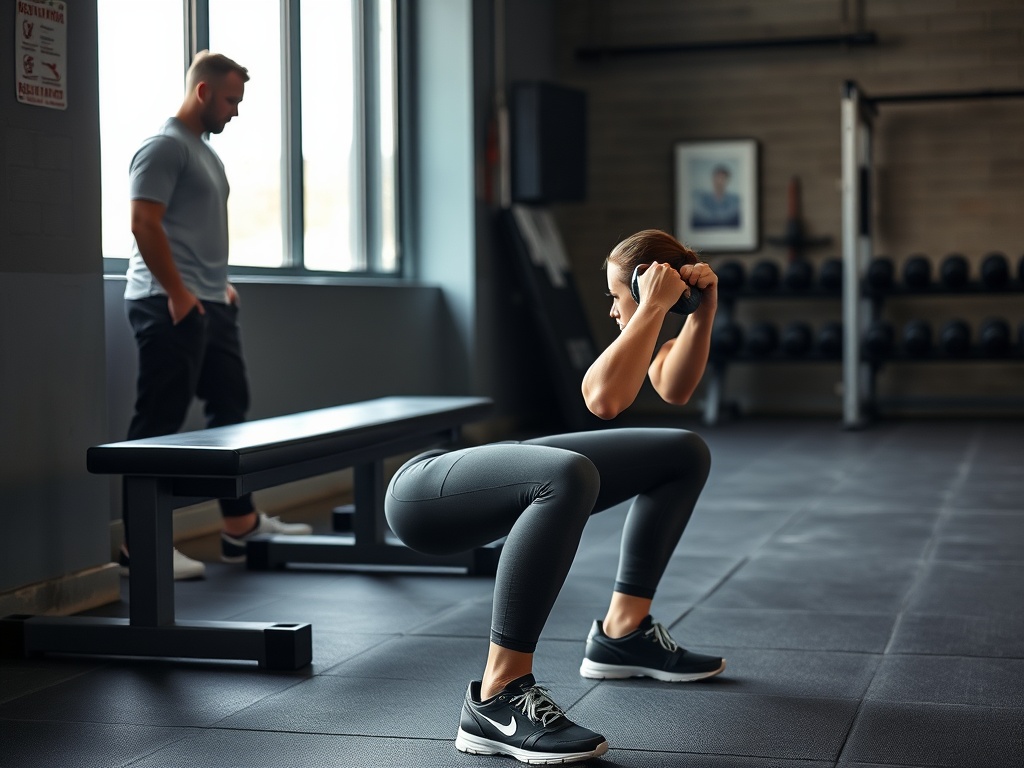
A squat is a way to lower and raise the body while the knees and hips bend together. For a new lifter, a chair sit-to-stand or a goblet squat can be easier to learn than a barbell back squat because the setup is simpler and the load is easier to change. The goal is not to reach a particular depth. Use a range that is controlled and appropriate for your mobility and comfort.
Progress can come from adding resistance, increasing the controlled range, or improving repetition quality. Do not rush to a barbell just because it looks more “serious.” A leg press or goblet squat can build meaningful strength if it is progressively challenged.
The Hinge: Learn to Load the Hips
The hinge pattern appears in deadlifts, Romanian deadlifts, and many everyday lifting tasks. A light dumbbell Romanian deadlift is often a practical teaching exercise because the load can stay close to the legs and the range can stop before the back position changes. Think about moving the hips backward while keeping the torso braced rather than trying to touch the floor.
Hinge exercises can create soreness when they are new, so progression should be gradual. This is one place where planned rest days support better training quality. More frequent exposure is not automatically better if technique is deteriorating because the muscles are still very sore.
Push and Pull With Stable Options First
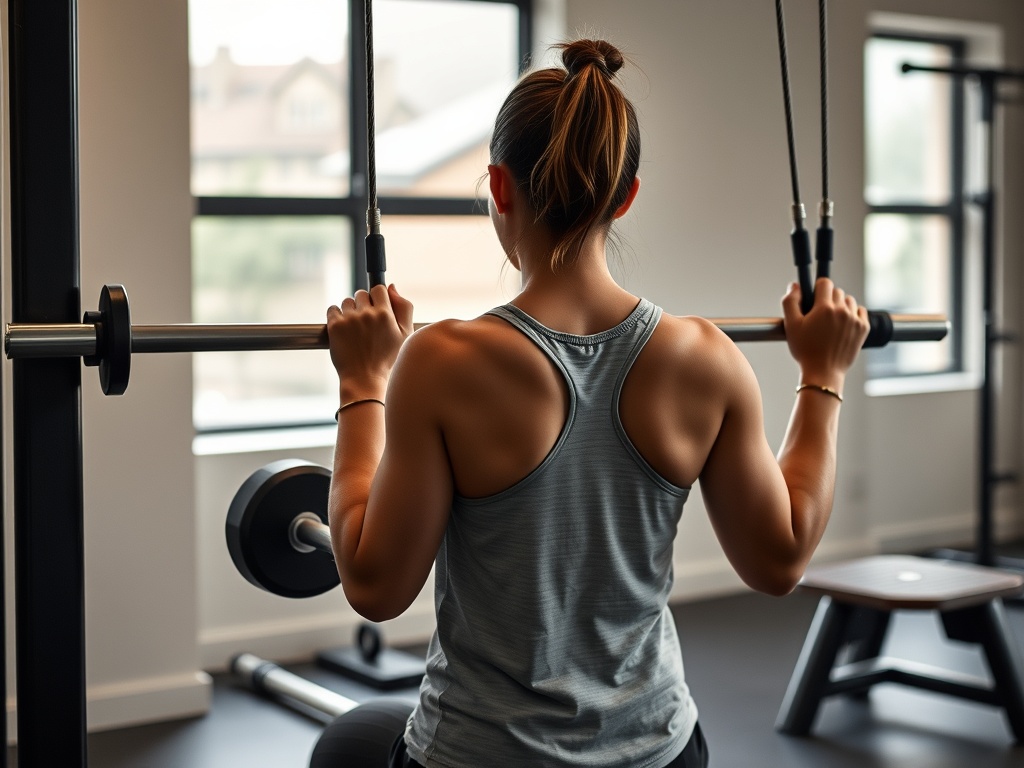
Upper-body pressing and pulling become easier to learn when the body or equipment is stable. An incline push-up lets you adjust difficulty by changing hand height. A machine chest press can provide a predictable path. For pulling, a cable row or supported dumbbell row reduces the need to balance the torso while learning how to move the shoulder blade and arm together.
The American Heart Association's resistance-training guidance notes that free weights, machines, and bodyweight resistance can all be used for strengthening. That flexibility is useful for beginners because it means you can choose the setup that feels safest and most repeatable rather than forcing one “correct” tool.
Single-Leg Work Builds Useful Capacity
Step-ups and supported split squats train one leg at a time while allowing the hands to use a rack, rail, or stable support if balance is limiting. They can reveal side-to-side differences, but small differences are common and do not automatically indicate a problem. Use the weaker or less coordinated side as information and keep the movement controlled.
Single-leg exercises are also easy to overdo because a modest load can feel challenging. Start conservatively and pay attention to soreness. The objective is to improve capacity over weeks, not to make stairs difficult the next day.
Carries and Trunk Exercises Keep the Program Practical
A carry is simple: hold a manageable weight and walk with stable posture. It trains grip, trunk stiffness, and coordination while adding a small conditioning demand. Trunk exercises such as dead bugs, planks, or Pallof presses teach bracing without requiring repeated spinal flexion.
These movements are not magic “core toners.” Their value is functional: they help you create and maintain a stable position while force moves through the body. That skill supports squats, hinges, presses, rows, and daily lifting tasks.
A Hypothetical Beginner Session
Consider an illustrative example, not a real client case. A woman new to resistance training has access to a basic gym and wants to become stronger without spending most of the week training. Her session could include a goblet squat, supported row, dumbbell Romanian deadlift, incline push-up, step-up, and a short carry. She practices the same movements long enough to become confident before changing exercises.
In the first few weeks, she records the load and how hard the final repetitions feel. As coordination improves, she adds small amounts of resistance or an extra repetition when the movement remains controlled. She does not need to reach failure. Using RPE and reps in reserve can help keep effort challenging without making every set maximal.
The example is intentionally ordinary. Beginner strength progress often comes from repeating basic movements with gradually better control and slightly more challenge, not from searching for a perfect women's-only routine.
Common Beginner Mistakes
Changing exercises every workout
Variety can be enjoyable, but constant change makes it hard to learn technique or measure progress. Keep a core group of movements stable for long enough to build skill.
Assuming soreness proves effectiveness
Soreness often reflects novelty. It does not tell you how much strength you gained. Performance over time is a better progress marker.
Avoiding challenging resistance indefinitely
Technique matters, but strength training eventually needs enough resistance to require effort. Once a movement is stable, progress it gradually rather than keeping the same very light load forever.
Comparing loads with other lifters
Body size, limb proportions, training history, exercise setup, and goals all affect the number on the stack or bar. Compare your current performance with your own previous performance.
Nutrition does not need to become rigid when training begins. A weekly meal system can support regular eating while allowing schedule and appetite flexibility.
Start With Movements You Can Progress
Pick one exercise from each major pattern, learn the setup, and record what you do. If the exercise remains pain-free, technically controlled, and gradually more capable over time, it is doing its job. The best beginner exercises are not defined by gendered marketing. They are the movements you can practice consistently and progressively while supporting your health, confidence, and goals.