If floodwater may have reached the intake, engine, transmission, or electrical connectors, do not restart the vehicle. The safer first step is to document the water level, disconnect use if safe, arrange inspection or towing, and let a technician check for water ingestion before the engine turns over.
TL;DR: Do not crank an engine that may have swallowed water.
- Water can damage mechanical, electrical, braking, and interior systems even after the vehicle looks dry.
- Inspection should happen before restarting, especially if water reached the engine bay, cabin floor, or high-voltage components.
Why Restarting Can Make Damage Worse
Engines compress air, not water. If water enters a cylinder and the engine is cranked, hydrostatic lock can bend internal parts or stop the engine violently. Even if the engine starts, contaminated oil, wet sensors, soaked connectors, or water in the transmission can create delayed failures.
Floodwater also carries mud, salt, sewage, and debris. That makes the problem different from a clean puddle splash. A vehicle can look normal after drying while corrosion begins in connectors, modules, bearings, and interior wiring.
Manufacturer repair guidance collected by NHTSA emphasizes broad inspection after flood exposure. The NHTSA flood damage repair guidance shows why water-damaged vehicles require more than a quick restart test.
What to Do Right After the Water Recedes
Start by staying safe. Do not stand in moving water, do not touch a vehicle near downed wires, and do not open electrical components if you are unsure. Take photos of the water line, interior floor, engine bay, and dashboard before moving anything.
If the vehicle is off, leave it off. If it stalled in water, do not try again. Arrange a tow to a shop that can inspect the intake tract, air filter, oil, transmission fluid where serviceable, brake condition, wheel bearings, and electrical connectors.
Flood exposure can create electrical symptoms later, so Parasitic Battery Drain Diagnosis for Cars That Die Overnight is a useful follow-up when the vehicle develops unexplained battery drain after drying out.
| Water Exposure | Risk Level | Next Step |
|---|---|---|
| Only tire contact on shallow clean water | Lower, if no symptoms | Inspect brakes and underbody, monitor noises |
| Water near bumper or intake height | High | Do not restart until intake is checked |
| Water inside cabin | High | Inspect wiring, modules, insulation, and contamination |
| Saltwater exposure | Very high | Tow and request corrosion-focused inspection |
Checks a Technician May Perform
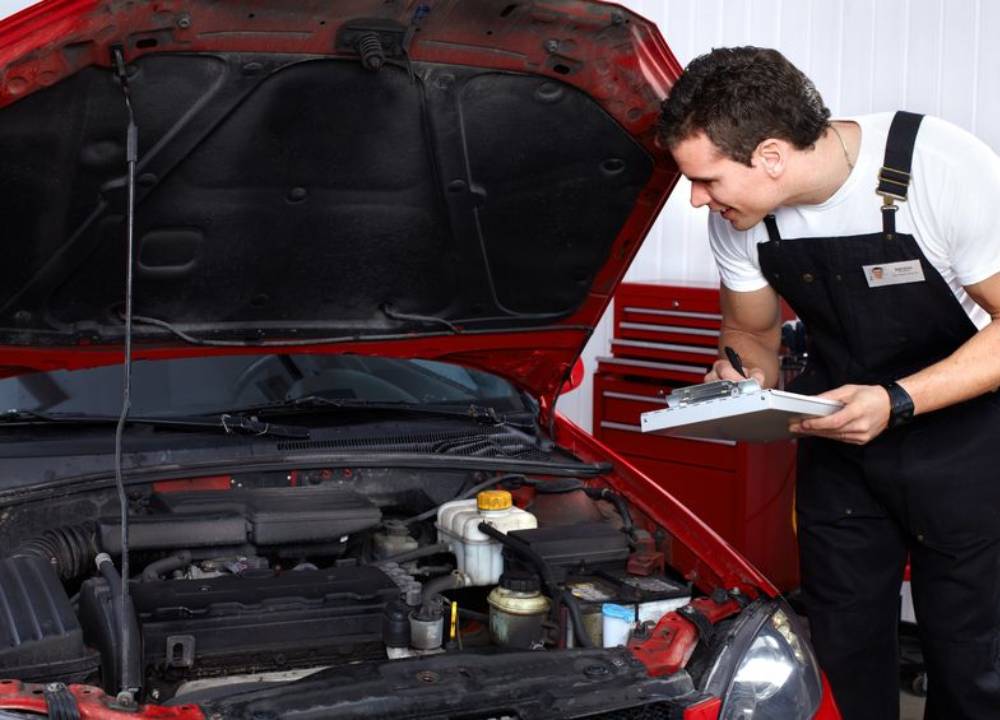
A technician may remove the air filter and intake ducting to look for water trails, check engine oil for milkiness or overfill, inspect spark plug holes on some engines, and verify that no cylinder contains liquid before cranking. They may also check the starter, alternator, belt drive, and exposed connectors.
Brake and wheel-end checks matter too. Water can wash away lubricants, trap grit, or leave rust on braking surfaces. A short road test should only happen after the engine and safety systems are judged safe to operate.
Common Mistakes After Flood Exposure
The first mistake is assuming that because the vehicle starts, it is fine. Some damage appears days later as corrosion grows or contaminated fluids circulate. The second mistake is using heat or household fans without removing wet insulation, which can leave moisture trapped under carpet.
Repair decisions should consider vehicle value, water depth, water type, and module locations. A general best practice is to be cautious with any vehicle that had water inside the cabin or near major electrical components. That is not a cosmetic problem.
A shudder or driveline symptom after water exposure may need separate diagnosis, and Why Your Car Shudders When Accelerating from a Stop explains how acceleration complaints can come from more than one system.
Questions to Ask Before a Flood-Exposed Vehicle Runs Again
A useful service conversation should connect the symptom to proof. For this topic, ask what the technician observed, what was tested, and what result made the next recommendation reasonable. That does not mean the driver needs to understand every technical detail. It means the explanation should be traceable: complaint, inspection, test, finding, repair option, and verification step.
For a intermediate driver, the most helpful notes are simple and specific. Record when the issue happens, weather or temperature, recent repairs, fuel level or driving conditions if relevant, and whether any warning lights appeared. A short timeline often saves diagnostic time because intermittent automotive problems rarely perform on command once the vehicle reaches the bay.
It is also reasonable to ask what would happen if the repair is delayed. Some emergency, roadside & same-day services concerns are mostly convenience issues for a short period, while others can affect safety, emissions readiness, drivability, or future repair cost. A trustworthy answer should separate immediate risk from longer-term wear instead of using pressure as a substitute for explanation.
When estimates include diagnostic labor, parts, programming, cleaning, road testing, or reinspection, ask which items are essential and which are conditional. This helps prevent two common frustrations: approving a cheap partial repair that does not solve the complaint, or approving a broad repair plan without understanding the evidence behind it.
Flood Exposure Records Worth Saving
Keep the invoice, test notes, code numbers if any, parts replaced, fluid condition comments, photos, and before-and-after observations. Good records are not only useful for warranty conversations. They also help another technician avoid repeating the same tests if the symptom returns weeks later.
After the vehicle is returned, test it under the same conditions that originally revealed the complaint, as long as doing so is safe. A repair that works only during a short parking-lot check may not be fully verified if the original problem happened on a cold start, in rain, during highway driving, while turning, or after sitting overnight.
If the issue comes back, avoid changing several variables at once. Do not clear codes, disconnect the battery, change phone settings, add fuel additives, or swap parts before documenting what happened. One clear repeat event is often more valuable than several guesses that erase clues.
A careful owner should also ask how the shop defines a successful result. Sometimes success means the warning light stays off after a monitor completes; sometimes it means draw falls after modules sleep; sometimes it means the symptom no longer appears during a matched road test. Defining that standard before repair makes the follow-up conversation clearer and more fair for everyone involved.
Finally, ask what would change the recommendation. If a test result is borderline, if a symptom cannot be reproduced, or if an inspection finds related wear, the best plan may be staged. Staged repair does not mean hesitation. It means fixing the proven issue first, then retesting before spending money on the next possible cause.
What to Monitor After the Vehicle Returns
Watch for warning lights, musty smells, hard starting, slipping, grinding, brake pulsation, electrical glitches, and new battery drain. Keep all inspection photos and service records because insurance, resale, and future diagnosis may depend on them.
If the vehicle is hybrid or electric, follow manufacturer and emergency guidance before charging or operating it. High-voltage systems add risks that should not be handled casually.
The Safest Restart Is the One You Delay
When floodwater reaches uncertain depth, the smartest move is restraint. Tow first, inspect first, and restart only after water ingestion and electrical risk have been ruled out.